The Games in Italy became the first real-world test of AI not as an experiment, but as full-fledged infrastructure. Yet, in our view, the most important aspect is still underdeveloped — engaging fans and the mass amateur audience in Olympic sport through AI.
OMY! Sports discussed the growing role of AI in the strategy of the International Olympic Committee and in the delivery of the 2026 Winter Olympics with Vedomosti. Sport.
Revolutionary Broadcasting
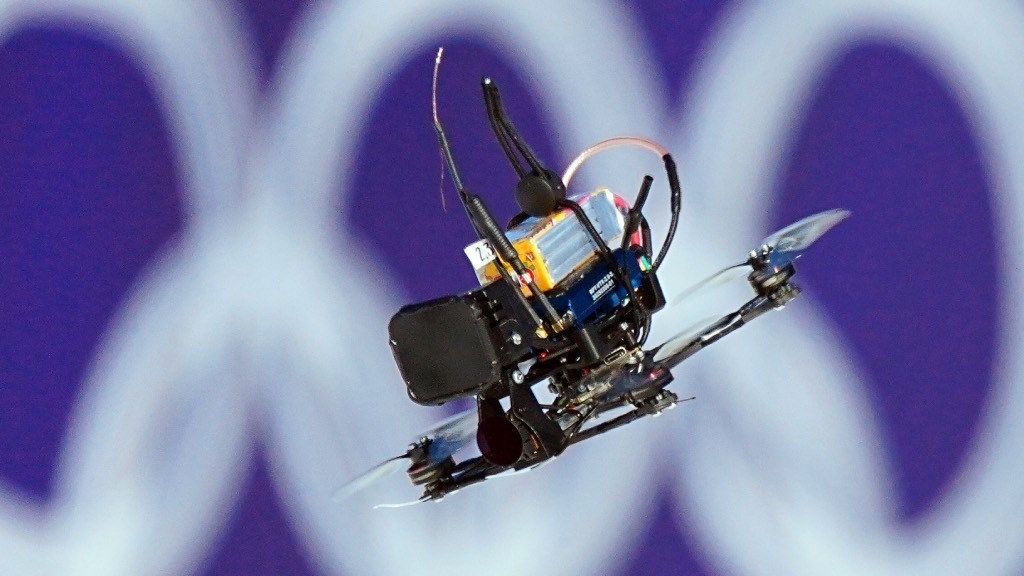
The 2026 Games marked the most significant technological upgrade in Olympic broadcasting in the past decade. A key innovation was the large-scale deployment of FPV drones (first-person-view cameras).
FPV drones reached speeds of up to 120–129 km/h, allowing them to follow athletes at race pace in alpine skiing, luge, skeleton, and bobsleigh. The cameras delivered first-person track perspectives and angles unavailable to spectators or traditional broadcast cameras.
The IOC’s philosophy toward technology was articulated by OBS CEO Yiannis Exarchos: “The Olympic Games are not about showcasing technology. They are about finding the most compelling ways to tell the stories of the world’s greatest athletes.”
Video replay systems also advanced significantly. Alibaba Cloud upgraded its 360-degree replay platform: AI algorithms generated 3D reconstructions of key moments within 15–20 seconds, enabling use during live broadcasts.
In ice hockey, Kinexon tracking systems measured more than 200 metrics — from puck speed to player movement patterns.
AI was also used to produce short-form content. The Automatic Media Description system, based on the Qwen model, automatically recognized athletes and key moments, generating descriptions and tags for highlights. This enabled the production of more than 5,000 short videos without extensive manual processing.
Judging, Safety, and Anti-Doping
Beyond broadcasting, AI at the 2026 Olympics served as a precision measurement tool for judges, supported athlete and spectator safety, and assisted in operational management of the event.
In an interview with Vedomosti. Sport, Oleg Mazurov, co-founder at OMY! Sports, offered a measured assessment of AI’s scale of application at the Games:
“Despite all the innovations, the real capabilities of AI have not yet become an integral part of the Olympic movement — particularly in areas where it could deliver practical value. For example, accelerating data processing and scoring calculations in figure skating, or helping mass amateurs acquire skills in specific sports more quickly. One inevitable consequence of any Olympics is increased interest among ordinary people in the most successful and spectacular disciplines. Supporting this interest is indirectly part of the IOC’s mission. Mass engagement can be achieved both through infrastructure investment and through AI technologies accessible to a wide audience.”
Systemic Integration of AI into the Olympic Movement
The “Olympic AI Agenda” introduced in 2024 established artificial intelligence not as an experiment but as a systemic tool with defined governance and accountability principles.
According to Mazurov, AI does not change the committee’s core processes but makes them more efficient:
“For the IOC, engaging amateurs in sport is essential. If AI can show people what was previously accessible only to professionals — and do so in an engaging way — participation will grow. That means greater interest in sport, more Olympic fans, and higher broadcast revenues. Additional benefits include more objective judging, fewer errors and controversies, reduced non-sport noise, and deeper audience engagement when AI reveals previously hidden aspects of sport in real time during broadcasts.”
The Future of the IOC in the AI Era
Experts point to Brisbane 2032 Summer Olympics as the next milestone — potentially a “technology Olympics” featuring extensive use of AI, virtual reality, and personalization to reduce infrastructure costs and expand global access to sport.
Mazurov believes the IOC’s future in the AI era will depend less on institutional strategy and more on real-world practice in global sport:
“Most likely, the direction will be determined by the speed and number of successful AI applications in mass and professional sport. The IOC will follow these trends rather than shape them. It is still unclear in what formats this will manifest. It is possible that some future Olympics may begin to resemble computer games — which, of course, would not be desirable. But one thing is clear: deeper integration of AI into Olympic practice is inevitable.”
Read the original article here: https://www.vedomosti.ru/sport/olympics/articles/2026/02/23/1178423-kak-ii-stal-chastyu-igr-2026?from=copy_text
OMY! Sports Team and Vedomosti Sport