
In our previous post, we covered the purpose of interval training and how it affects the body. Continuing that topic, it's important to note that the volume of such workouts needs to be carefully measured — no more than about 20% of a well-structured training program. Why? To avoid overloading the body while still reaching the upper limits of running economy — in other words, achieving a lower heart rate at a higher speed.
Threshold Training (Zones 3–4)
The goal is to raise the lactate threshold — to train your body to run faster at the same level of blood acidification. These workouts are more common among well-prepared runners and less so among beginners, as they require a solid aerobic base.
Tempo runs: 20–40 minutes of continuous running at a "comfortably hard" pace — hard enough that you can say a short phrase, but not hold a full conversation. Roughly 15–20 sec/km slower than your 10K race pace.
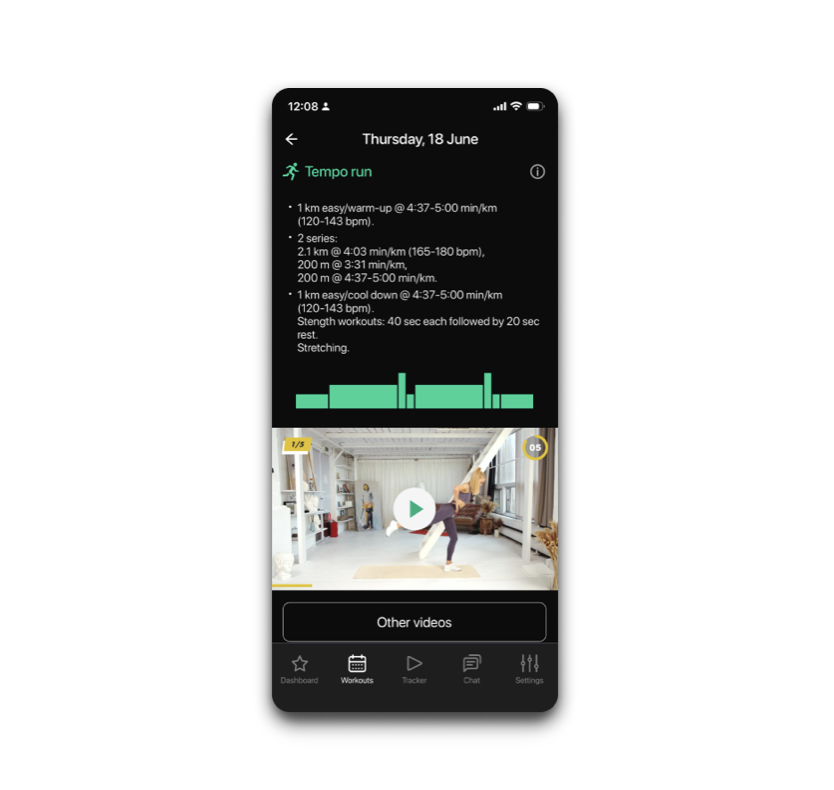
Cruise intervals: A classic: 3–5 × 8–10 minutes at threshold pace, with 1–2 minutes of rest between reps. Less monotonous than a straight tempo run, but the same physiological effect.
Long progressive tempo runs: For example, 16 km with a gradual build — the first 8 km at an easy pace, then every 2 km slightly faster over the remaining 8 km, finishing in the threshold zone.
Speed Workouts (Zone 5)
The goal is neuromuscular efficiency, tendon stiffness, and VO2max development.
VO2max intervals: 4–6 × 1000 m at your 3–5 km race pace, with rest equal to the time of each rep. A must-have in any training program aimed at race distances of 10 km and beyond.
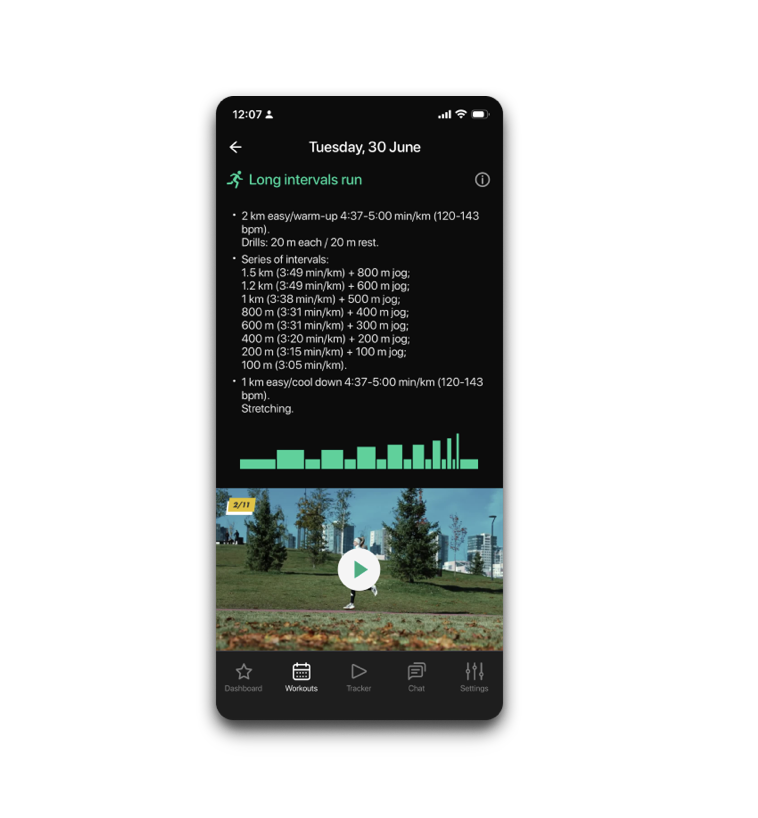
Hill sprints: 8–10 × 10–20 seconds at maximum effort uphill, with full recovery of 2–3 minutes. Highly effective for neuromuscular adaptation and low injury risk — the incline reduces impact forces.
Fartlek: For example, 10 × (1 minute fast / 1 minute jog) within an easy run. Less structured, no track required, but highly effective — especially for runners just beginning to add speed work.
Short repetitions: 8–10 × 200 m or 6–8 × 400 m at faster than 5 km race pace, with full rest between reps. The focus is on mechanics and neuromuscular efficiency, not on lactate accumulation.
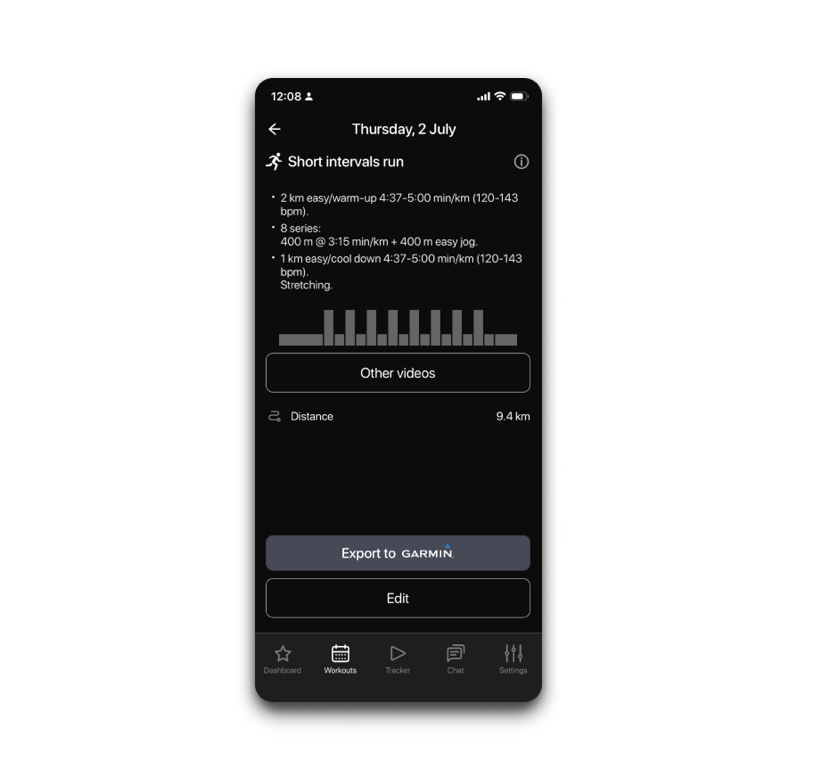
Most of these sessions are already included in your training plan if it's designed around a target race.
Your OMY! Sports Team